The Short Answer: Match the Method to the Surface
Pressure washing uses high water pressure alone to blast dirt and growth off hard surfaces like concrete and brick. Soft washing uses low pressure plus a cleaning solution to lift algae and mildew off siding, stucco and roofing without damaging them. As a rule: driveways and patios get pressure, siding and roofs get a soft wash.
TLDR
- Pressure washing sprays water alone at high force. It's built for concrete, brick and other hard surfaces.
- Soft washing uses low pressure and a cleaning solution. It's built for vinyl siding, stucco and roofing.
- Vinyl siding makers generally advise against power washing, since high pressure can force water behind the panels.
- A soft wash breaks down algae and mildew at the surface, so growth is slower to come back than a plain rinse.
- Concrete, brick and most masonry can safely take real pressure without a special solution.
- Using the wrong method on the wrong surface is how siding gets damaged and driveways stay half-clean.
- We pick the method based on what's actually in front of us, not one default setting for every job.
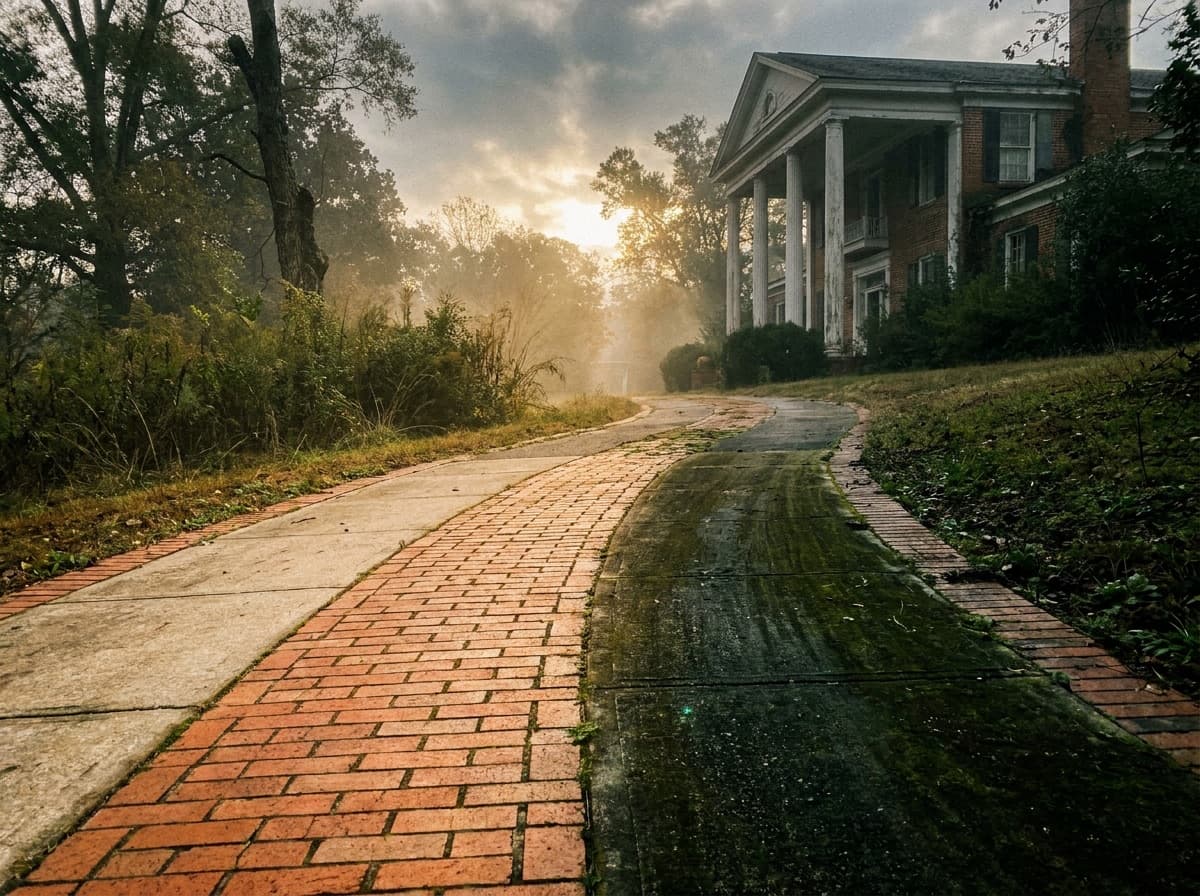
West Baton Rouge Parish sits in some of the most humid air in the country, and that humidity feeds algae and mildew fast on shaded siding and north-facing walls. Homeowners in Erwinville, Port Allen, Brusly and Addis usually call us after a neighbor's house gets washed and theirs suddenly looks dull next to it, and the first question is almost always the same: is pressure washing safe for siding, or does it need something gentler.
Ready to see a number?
A free estimate takes a photo and a couple of details. Most quotes go back out the same day.
What Pressure Washing Actually Does
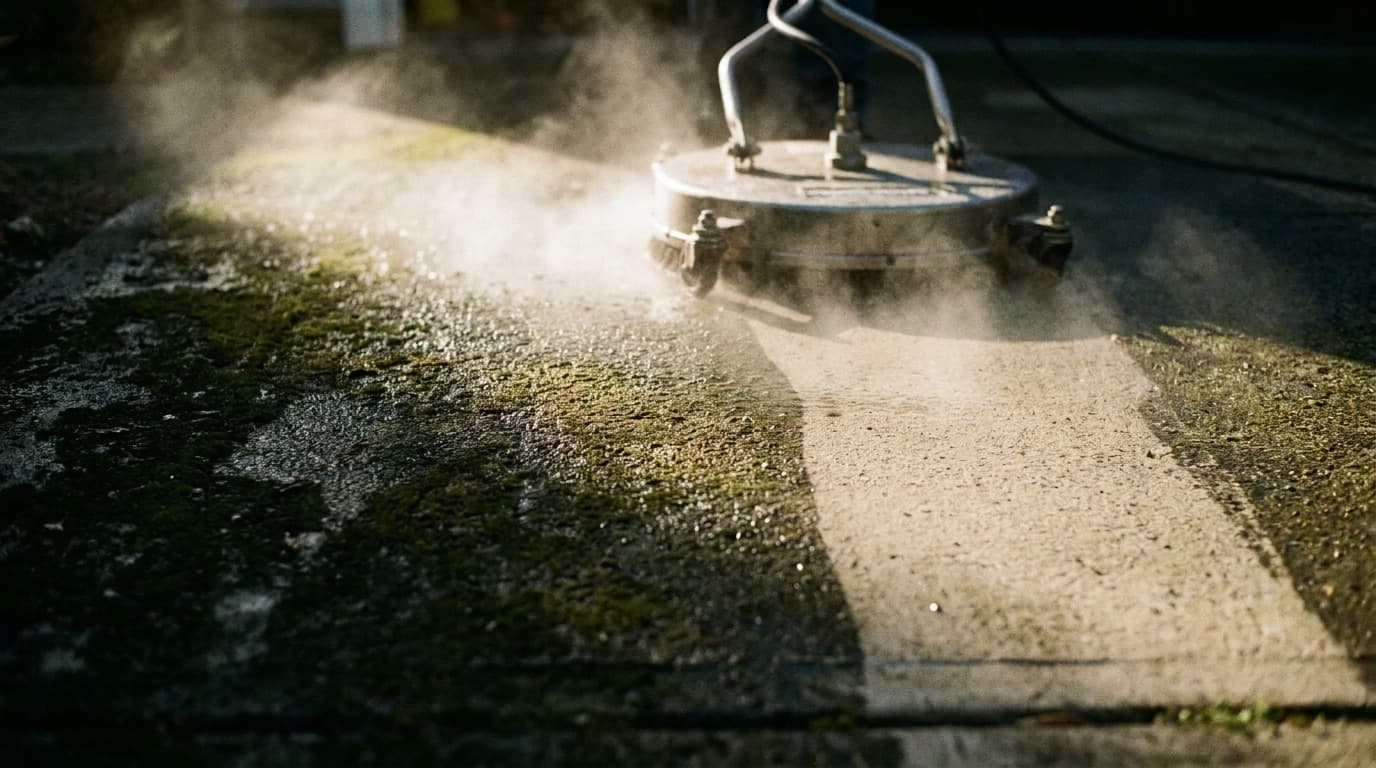
Pressure washing sprays water alone at high force, usually somewhere between 1,500 and 3,000 PSI depending on the surface and the equipment. There's no cleaning solution doing the work. The pressure itself is the tool, physically knocking dirt, grime and light growth off whatever it hits.
That makes it the right call for concrete driveways, sidewalks and most patios, where the surface is hard enough to take the force and the grime is embedded in the pores rather than sitting on top of a finish. Our own driveway and sidewalk cleaning and patio and concrete cleaning jobs both run on real pressure, because that's what actually lifts oak tannin stains and years of algae out of concrete.
It's a blunt tool, though, and blunt tools do damage when they're pointed at something delicate. That's where soft washing comes in.
What Soft Washing Actually Does
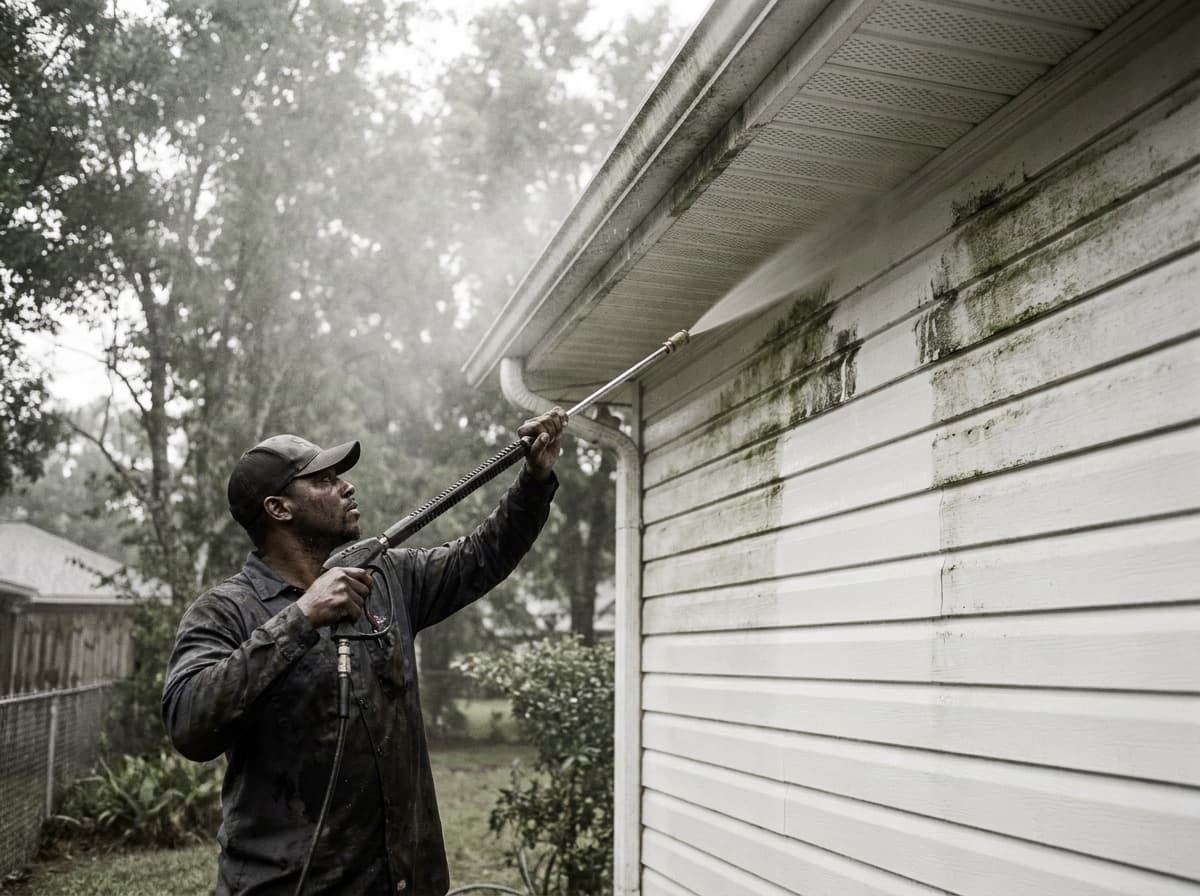
Soft washing flips the formula. Pressure drops to a fraction of what a driveway job runs, and a cleaning solution does the actual work of breaking down algae, mildew and mold before a low-pressure rinse washes it away.
That's the right approach for vinyl siding, stucco, screens and most roofing, and it's not just a preference. In its current care guide, CertainTeed states plainly that it does not recommend power washing vinyl or polymer siding, warning that high pressure can force moisture behind the panels and cause damage or discoloration. That's one of the largest siding manufacturers in the country saying it directly, not a pressure washing company's opinion.
Our house washing and soft washing services both use this method for exactly that reason. It's slower than blasting a wall with a wand, but it's the only version of the job that doesn't risk what's underneath the siding.
Not sure which your house needs?
Send us a photo of the siding, roof or concrete you're looking at and we'll tell you honestly which method it needs, no charge and no obligation either way.
Why Using the Wrong One Can Cost You
The real risk isn't cosmetic. High pressure aimed at vinyl siding can crack panels, blow out caulk lines and, worst of all, drive water into the wall cavity behind the siding, where it can sit unnoticed until mold or rot shows up months later.
It runs the other direction too. Soft washing a driveway with a mild solution and low pressure will make it smell better for a day and do almost nothing for the tire marks and algae actually embedded in the concrete. Wrong tool, disappointing result either way.
This is the whole reason we walk a property before we quote it rather than pricing blind over the phone. What's actually there decides the method, not the other way around.
How to Tell Which Your House Needs
Most jobs sort themselves out once you know what to look for. As a starting point:
Common Soft Washing and Pressure Washing Questions in West Baton Rouge
These are the questions we hear most before a first visit, usually from people who've gotten conflicting advice from two different companies.
Will pressure washing ruin my vinyl siding?
It can, at high pressure. That's why manufacturers like CertainTeed generally advise against power washing vinyl siding at all, and why we soft wash siding at low pressure with a cleaning solution instead of running a pressure washer straight at it.
Is soft washing safe for a roof?
Yes, and for asphalt shingle roofs it's close to the only safe option. High pressure can strip the granules off shingles, which is a separate and more expensive problem than the algae staining it was supposed to fix.
Can concrete be soft washed instead?
Not effectively. Concrete needs real pressure to lift dirt and algae out of its pores. A soft wash will make a driveway smell clean without doing much for the actual staining.
How often will my house need a soft wash?
Most homes in this area need one every 12 to 18 months. Louisiana's heat and humidity regrow algae and mildew faster than drier climates, so it comes back on a schedule regardless of the house's age.
Is soft washing more expensive than pressure washing?
Not on our pricing. House washing and soft washing both start at $225, in the same range as a full pressure-washed exterior job. The method changes based on the surface, not the price tier.
Do you offer soft washing across West Baton Rouge Parish?
Yes. It's part of our regular route from Erwinville out through Port Allen, Brusly, Addis and Plaquemine, along with the rest of our service area.
What if I'm still not sure which service I need?
That's what the free estimate is for. Tell us what you're looking at and we'll tell you which method it calls for before anything gets scheduled.
Let's get a look at it.
Send a couple of photos or give us a call. We'll tell you what it needs and what it'll cost, no pressure either way.
Related reading