It's Algae, Not Age. Here's Why It Grows There
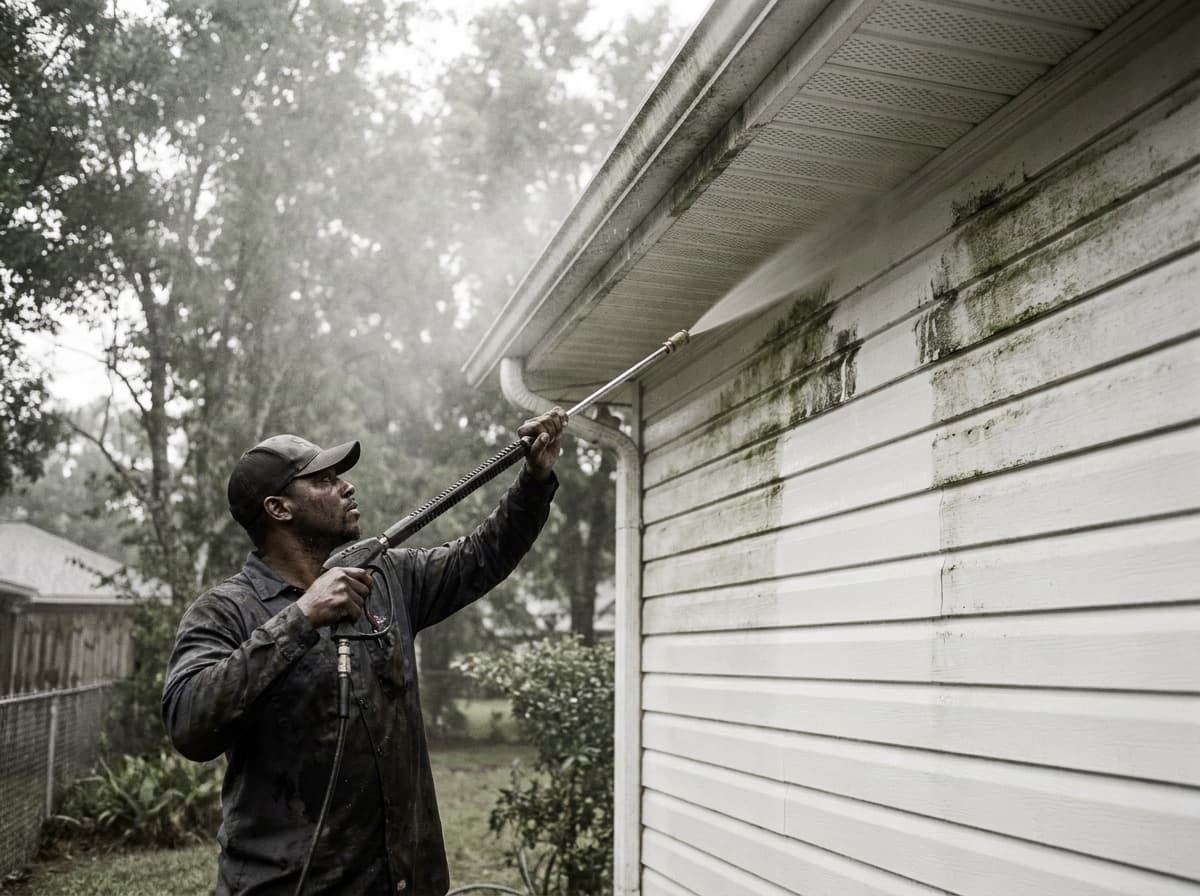
The green film on a home's north or east-facing walls is algae, feeding on moisture that never fully dries in the shade. It's common in Louisiana's heat and humidity and isn't a sign of bad siding or a failing house. It comes off with a proper soft wash, and it grows back faster than most people expect if the property isn't washed again on a schedule.
TLDR
- North and east-facing walls stay damp the longest, since the sun never fully dries them out.
- That trapped moisture is exactly what algae and mildew need to take hold.
- It's organic growth, not a sign your siding or paint is failing.
- A garden-hose scrub or a quick DIY pressure wash usually only removes the surface layer.
- A proper soft wash breaks down the growth itself, not just what's visible.
- It comes back. Most homes here need another wash every 12 to 18 months to stay ahead of it.
- Newer homes are not exempt. Shade and humidity don't check a house's age.
Louisiana's heat and humidity keep exterior surfaces damp longer than almost anywhere else in the country, and that's the entire reason this shows up here so consistently. Homeowners from Erwinville to Baton Rouge tell us the same story: the house looked fine for a couple of years, and then the north wall or the shaded side under a big oak started turning green almost overnight.
Ready to see a number?
A free estimate takes a photo and a couple of details. Most quotes go back out the same day.
Why the North Side Specifically
Sunlight dries out moisture. The side of a house that gets the least direct sun, usually north-facing in the northern hemisphere, and any wall shaded by trees or a neighboring structure, simply stays wetter for longer after rain, dew, or a humid night.
LSU AgCenter's guidance on preventing mildew and decay puts it simply: any home surface is subject to mildew when it stays damp or the air around it is humid, and the fix is keeping surfaces clean and dry. Shaded walls fail the second half of that on their own, all year, which is why the growth concentrates there instead of spreading evenly across the whole house.
Algae and mildew feed on the thin organic film that builds up on siding over time, dust, pollen, and airborne spores that stick to a damp surface. Once established, it spreads on its own timeline, not the house's.
Is It Actually Damaging Your Siding?
Mostly, it's cosmetic in the short term. A green or black film on siding doesn't mean the material underneath is failing. It means moisture and shade have created conditions the growth likes, nothing more.
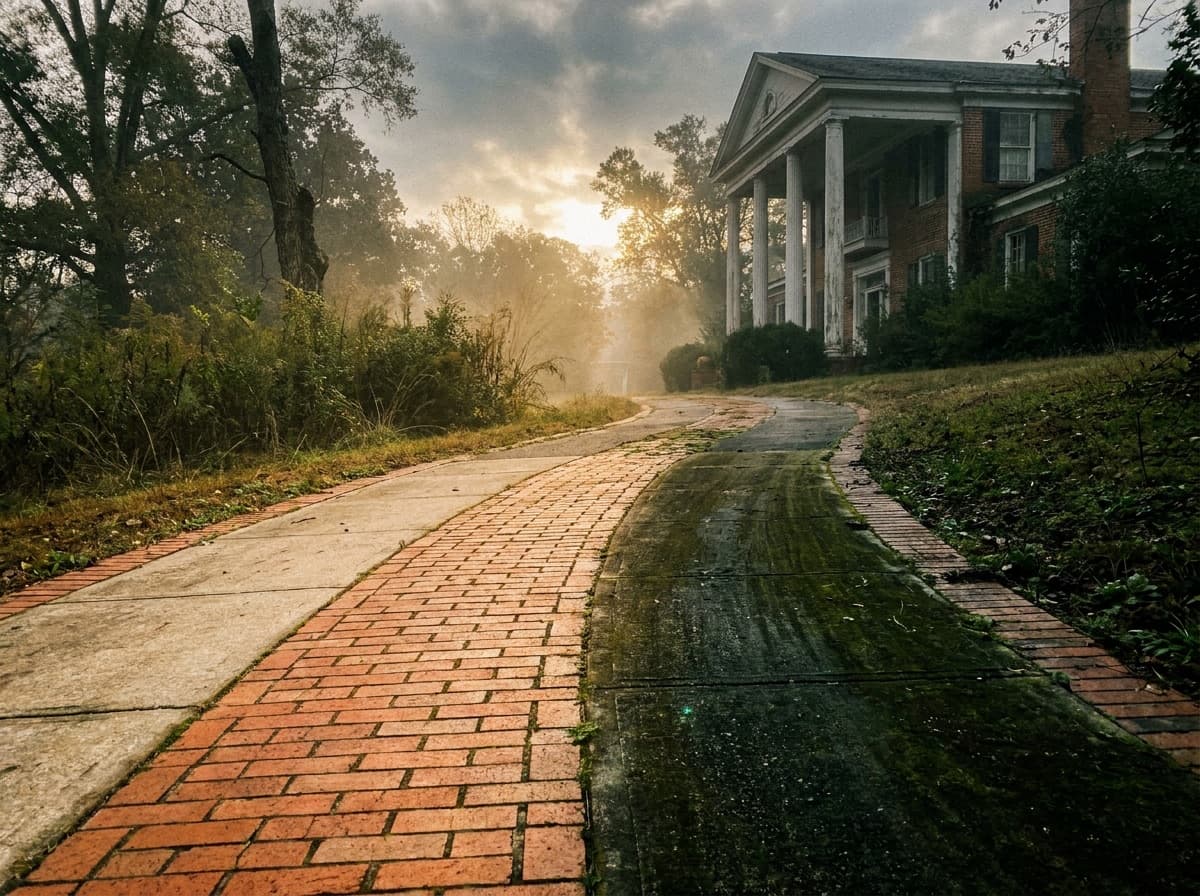
Left alone for years, though, it's not nothing either. A thick, established colony holds moisture directly against the surface it's growing on, and prolonged dampness against paint or siding is the same condition that eventually leads to bigger, slower problems. Catching it with a wash every 12 to 18 months keeps it a cosmetic issue instead of letting it become something more.
Our house washing service exists for exactly this problem: getting to it before it's had years to work on the same wall.
See what it takes to fix the north wall
Text us a photo of the shaded side of your house and we'll tell you what's involved and what it costs, no charge either way.
Why Pressure Washing Alone Isn't the Fix
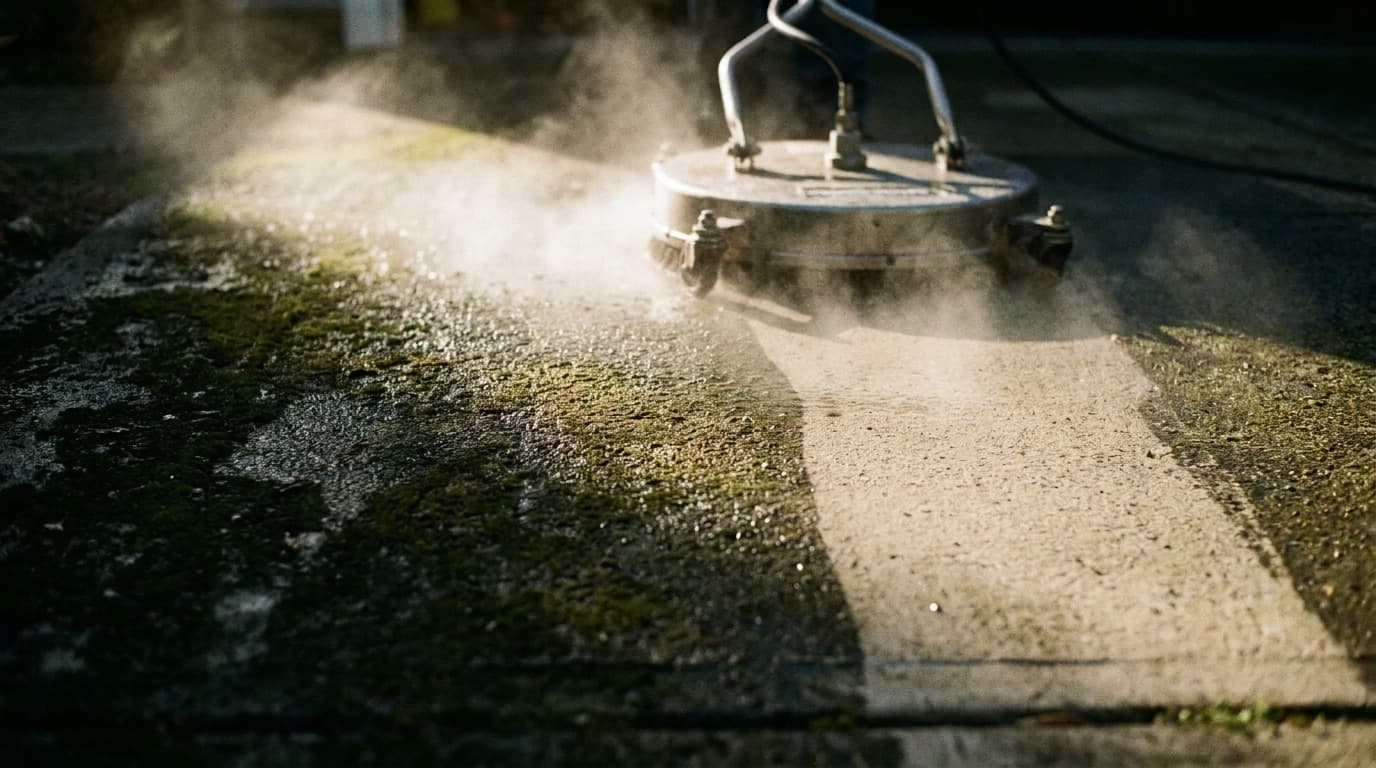
A straight blast of high-pressure water will knock the visible film off, and the wall looks clean again for a while. But water pressure alone doesn't do much to the organism itself, just the surface layer sitting on top of it.
That's the difference covered in our own breakdown of soft washing versus pressure washing: a soft wash uses a cleaning solution built to break down algae and mildew, not just rinse it, which is also the gentler and manufacturer-preferred method for vinyl siding in the first place.
That combination, the right chemistry at low pressure, is why a soft-washed wall tends to stay cleaner longer than one that was just rinsed hard.
How Often You'll Need to Do This in West Baton Rouge
Most homes in this climate need a wash every 12 to 18 months to stay ahead of regrowth on shaded walls. Homes with heavy tree cover, or ones close to the river where humidity runs even higher, sometimes need it closer to the 12-month mark.
This isn't specific to older homes either. Newer construction with fresh vinyl siding grows the same algae under the same shade and moisture conditions, sometimes within the first couple of years.
If the north side of your house is already showing green, the fastest way to find out what it'll take to fix is a free estimate.
Questions About Algae and Green Stains on Louisiana Homes
These come up almost every time we're asked about the green film on a shaded wall, so here's the short version of each answer.
Is the green algae dangerous to touch?
We treat it as a nuisance for your home's exterior, not a hazard to people or pets in normal contact. If you have specific health concerns, especially around interior mold rather than exterior algae, a qualified inspector is the right call, not a pressure washing company.
Can I just pressure wash it off myself?
You can knock the visible layer off, but a straight blast usually doesn't reach the growth itself, and high pressure on vinyl siding carries its own risk of forcing water behind the panels. A soft wash handles both problems at once.
Will bleach get rid of it for good?
Bleach can lighten what's visible, but without the right dwell time and technique it often doesn't reach the growth underneath, and it can damage nearby plants and landscaping if it isn't handled carefully.
Does this mean something is wrong with my siding?
No. It means that section of the house stays shaded and damp longer than the rest, which is exactly the condition algae needs. It shows up on quality siding just as often as anything else.
How fast will it come back after a professional wash?
Most homes here go 12 to 18 months before it's noticeable again. Heavily shaded walls or homes close to the river sometimes need attention closer to the 12-month mark.
Is this only a problem on older homes?
No. Shade and humidity affect new vinyl siding the same way they affect older siding. It's common for a home just a few years old to need its first wash already.
Do you treat the algae or just wash it away?
Soft washing uses a cleaning solution meant to break down the algae and mildew itself, not just rinse the visible film off the surface, which is part of why the results last longer than a plain pressure rinse.
Let's get a look at it.
Send a couple of photos or give us a call. We'll tell you what it needs and what it'll cost, no pressure either way.
Related reading