
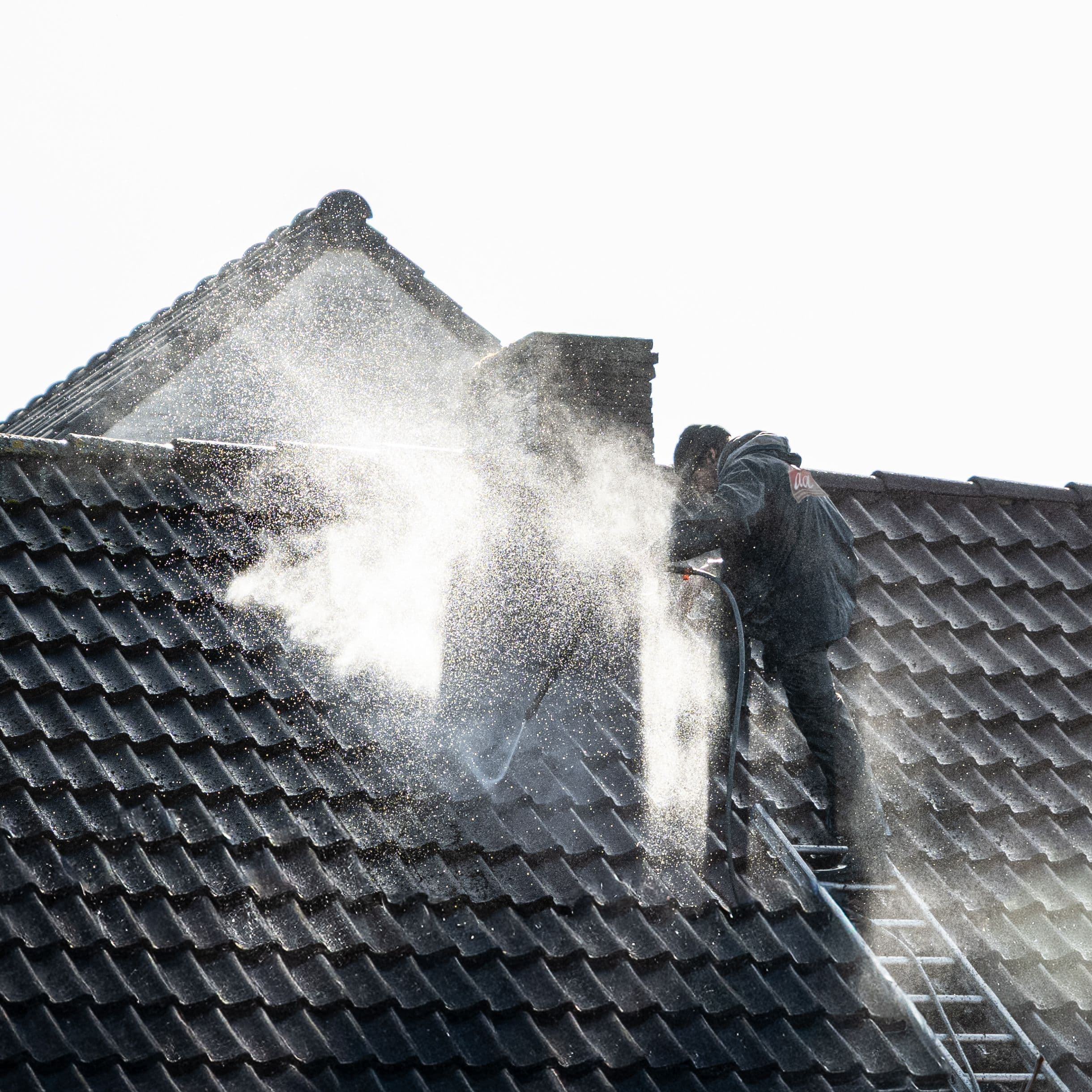
What are the black streaks on my roof?
They are a blue-green algae called Gloeocapsa magma. It feeds on the limestone filler in asphalt shingles, and it spreads worst on the north-facing and shaded slopes.
It is not dirt, it is not soot, and it will not wash off in the rain — which is why it keeps getting worse every year rather than better.
Left alone it holds moisture against the shingle. That shortens the life of a roof that costs many thousands to replace, and it spreads to the slopes that are still clean.
Plenty of people are told the roof is simply worn out and needs replacing, when what it actually needs is cleaning.
Treated correctly — at low pressure, never with a pressure washer — the streaking comes off and the roof gets years back. The method matters enormously here, and it is worth understanding before anyone gets on your roof.
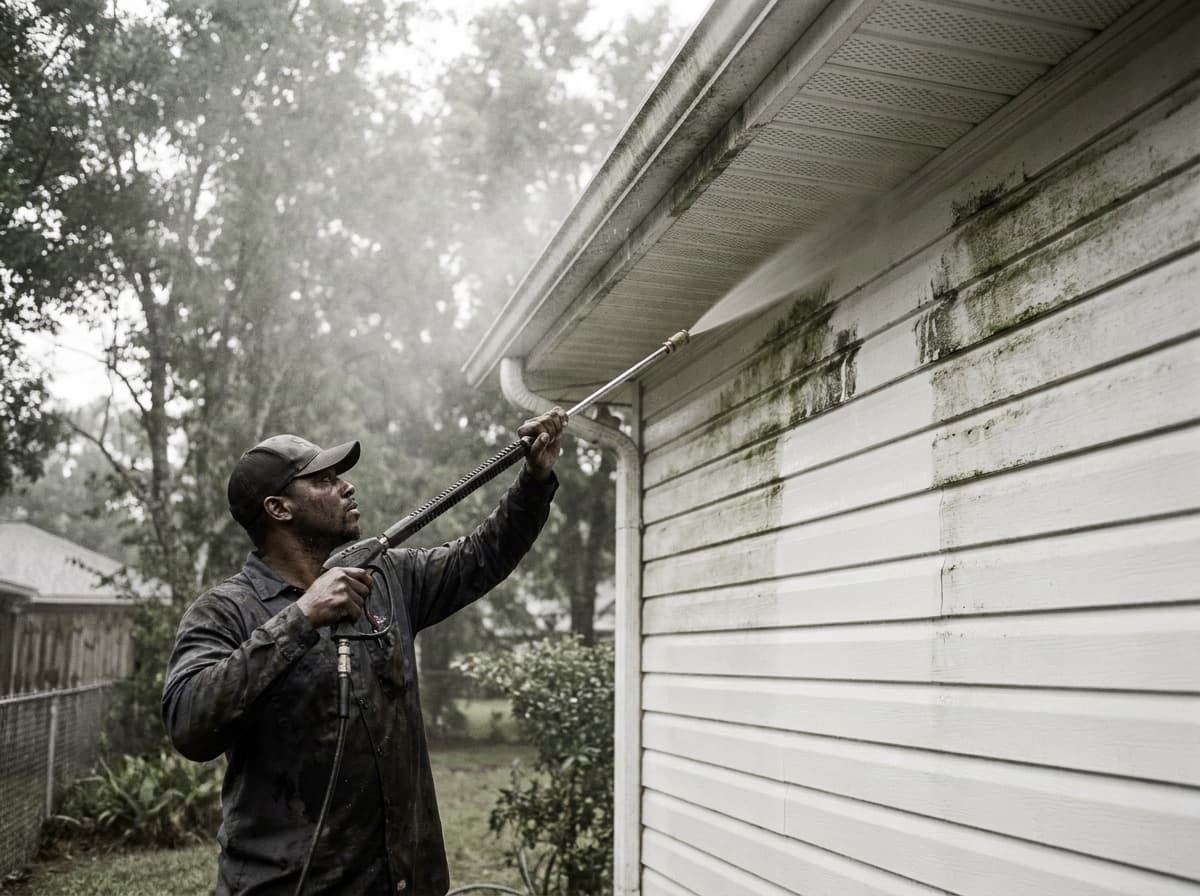
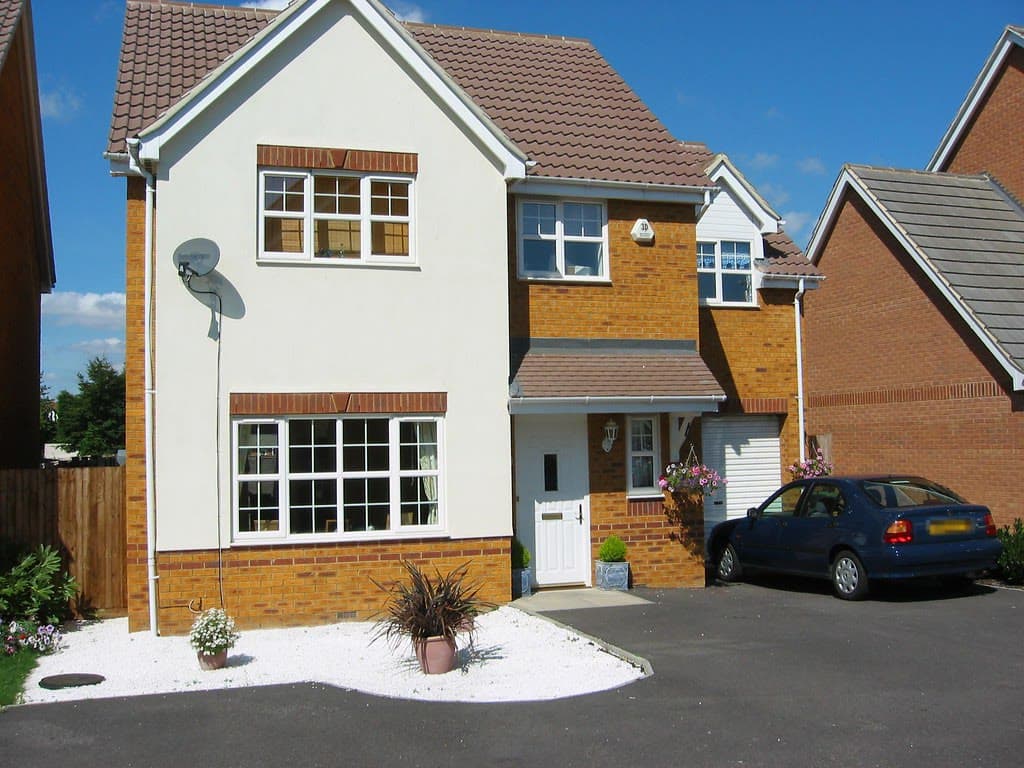
Never with pressure
A pressure washer will strip the protective granules straight off asphalt shingles. That destroys the roof, and it voids most manufacturer warranties.
Roofs are cleaned with a low-pressure application that kills the algae and lets the weather rinse it away over the following weeks. The industry standard for this is the method published by ARMA, the asphalt roofing manufacturers' association.
What you get
Our process
How a roof is cleaned
Never with pressure. This follows the low-pressure method published by ARMA, the asphalt roofing manufacturers' association.
We inspect before anything else
Pitch, shingle condition and brittle sections are checked first. If a roof should not be walked, it does not get walked.
We protect everything below
Beds, shrubs and anything beneath the eaves get pre-wet and covered before we begin.
We apply a low-pressure treatment
The solution is laid on gently and kills the algae in place. A pressure washer here would strip the protective granules and void most shingle warranties.
We let it work
Much of the change shows immediately; the rest continues to rinse clear over the following weeks as it weathers.
We rinse the runoff
Gutters, downspouts, siding and the landscaping below all flushed so nothing is left sitting.
We show you the result
Photos from the ground, so you can see the before and after without getting on a ladder.
What it costs
| Single-story, up to 1,500 sq ft | $350 |
|---|---|
| 1,500–2,500 sq ft | $495 |
| Two-story or steep pitch | Custom quote |
Every quote is free and firm — the price we give you is the price you pay.
No bridge between us and you.
Based in Erwinville, LA — about an hour in every direction. Port Allen, Brusly, Addis, Plaquemine, New Roads, Baton Rouge, Zachary, Prairieville and everywhere between.
Questions people ask
Will this damage my shingles?
Not done correctly. The damaging approach is pressure, which strips granules — that's exactly why roofs are cleaned at low pressure with a treatment instead.
How long until it looks clean?
Much of the change shows immediately, and the rest continues to rinse clear over the following weeks as it weathers.
How often does a roof need it?
Most roofs around here go several years between treatments, depending on shade and how much tree cover sits over them.
Let’s get a look at it.
Send a couple of photos or give us a call. We’ll tell you what it needs and what it’ll cost — no pressure either way.